
Distraction by Design: How Vehicle Controls Can Minimise Driver Distraction
Modern vehicles offer an increasing number of functions operated via physical controls, touchscreens or voice commands. A study by UDV examines which interfaces are best suited to different tasks and how their design can help minimise driver distraction.
- Publication on the topic
The driving simulator study
In a driving simulator, 130 experienced drivers performed additional control tasks using steering wheel buttons, a touchscreen or voice control. These included a simple, single-step task (indicating a lane change) and a more complex, multi-step task (making a phone call).
Driving performance was assessed using the standardised lane-change task defined in ISO 26022. Measures included lane deviation, reaction time and steering accuracy.
The study also systematically varied 51 interface design features: 12 relating to steering wheel buttons, 23 to the touchscreen and 16 to voice control. For example, removing tactile resistance and audible click feedback from steering wheel buttons made them more difficult to operate without looking.
The most suitable interface depends on the task
The level of driver distraction depends not only on the type of interface but also on task complexity and the quality of its design. The study highlights different strengths of voice control, physical controls and touchscreens.
Voice control: Best suited to complex tasks
Voice control was associated with the lowest overall level of driver distraction, particularly during complex tasks such as making phone calls. It primarily relies on auditory and verbal resources, reducing the need for visual searches and manual inputs.
To achieve these benefits, voice control must be reliable, recognise natural language and allow for brief interactions. Frequently used functions should be accessible through a single command, and users should be able to terminate an interaction immediately. Alternative controls should remain available for important functions.
Physical controls: Ideal for time-critical functions
Physical controls and voice control caused little distraction during simple tasks. However, buttons, levers and rotary controls are particularly suitable for time-critical driving functions that require an immediate response, such as indicators, windscreen wipers, hazard warning lights and volume adjustment.
Controls should be easy to locate and distinguish without looking. Consistent positioning, distinctive shapes, tactile surfaces and clear mechanical feedback support eyes-free operation. Multifunction steering wheels should have as few controls as necessary, with each easily identifiable.
Touchscreens: Suitable for non-time-critical functions
Touchscreens provide flexible access to numerous functions and complex menus. In the study, they performed second only to voice control during complex tasks. They are best suited to functions that do not require immediate operation.
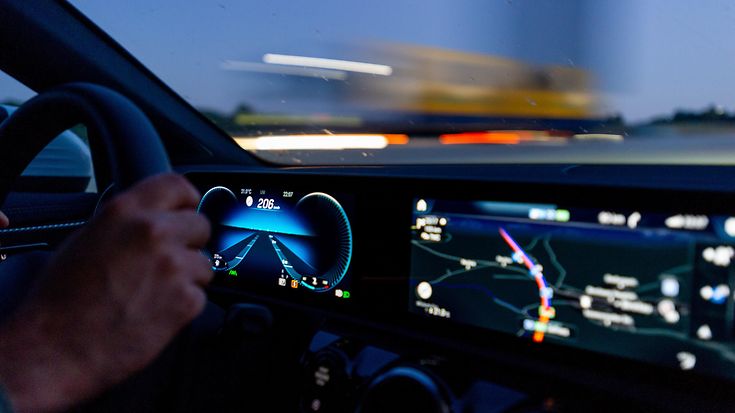
Good design is essential. Screens should be positioned high and close to the driver's natural field of vision, while remaining within easy reach. Large, clearly separated touch targets improve usability, and frequently used functions should require only a few steps. Simple taps are preferable to more complex swiping or sliding gestures.
Essential driving information, such as speed and warning messages, must remain visible at all times and should never be obscured by menus, pop-ups or media content.
What to consider when buying a car
Vehicle controls deserve attention already when choosing and test-driving a car. Key questions include:
- Immediate access: Are indicators, windscreen wipers, hazard warning lights and other time-critical functions readily accessible?
- Eyes-free operation: Can frequently used physical controls be located and distinguished without looking?
- Touchscreen usability: Can important functions be accessed in just a few steps?
- Display positioning: Is the screen clearly visible and within easy reach from the normal driving position?
- Voice control: Does the system respond reliably, even with background noise?
- Alternative controls: Are other ways of operating important functions available?
- Safety ratings: For vehicles assessed by Euro NCAP from 2026 onwards, how did the vehicle perform in the Safe Driving category, particularly under General Vehicle Controls?